I HAVE CLOSED DOWN THIS BLOG. Please click the photo above to be REDIRECTED TO MY NEW (continuation) BLOG.
Showing posts with label heather. Show all posts

Saturday, 1 August 2020

The bonnie, blooming heather


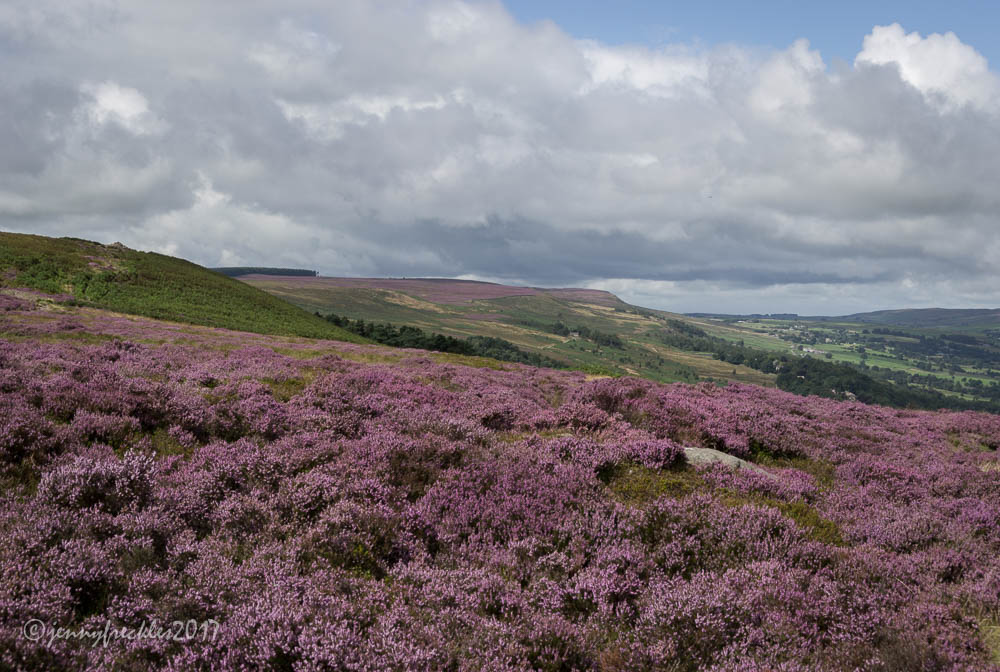
Like bluebells, the heather peaks at different times in different places. I took a walk on Shipley Glen and found it in bloom, perhaps not quite at its peak but near enough. (I'm hoping the heather on Haworth Moor is a bit slower to bloom. I'm supposed to be leading a photo walk there in mid-August and I was hoping for some colour then!) I do love the soft tones, though purple isn't a colour I'd ever wear, or decorate my house with. It's very pretty on the moors though. 


I really love the harmony of purples, greys and greens that you get with heather, the gritstone rocks, soft mauve grasses and, in this case, some purple flowered rosebay willowherb in the background.


Saturday, 28 March 2020

Bingley Cemetery


One of my friends mentioned how peaceful and attractive the main cemetery in Bingley is. I'd never been before but I decided I'd have a walk there and it was lovely. I've said before how much I enjoy exploring graveyards, probably because I grew up next door to one. I loved playing there and watching the wildlife that lived there. I don't find them macabre places at all, and Bingley's is especially beautiful. It is set on a hillside on the edge of town. I was fortunate to visit when the winter heathers were in bloom, as someone has filled many of the older graves with plants and they looked wonderful.


There are a number of war graves. The one below is that of Thomas Whitley, an 18 year old RAF cadet from Cottingley Bridge, who was killed in action just three months before the end of the First World War.


There is plenty of Victorian statuary, several angels (see yesterday) and some rather impressive monuments like the soaring, slender one below. 


 If I was to have a grave (which I won't), I'd be very happy to have it filled with daffodils.


Sadly, Bingley Cemetery is also known as the place where the Yorkshire Ripper, Peter Sutcliffe, once worked as a grave digger. He claimed it was here that he first heard the voices that told him to go and kill prostitutes. Tragically he went on to murder at least 13 women in Yorkshire and attempted to murder another seven. It was a terrible period (late 1970s) in the history of this part of the world. I was a student in Bradford at the time and used to get very scared walking home on my own after dark.


Tuesday, 12 November 2019

Tarbert and Luskentyre


Harris, day three
I knew I needed to catch up on my sleep by this stage, so I stayed in bed whilst most of the others (younger, by and large!) went out on a pre-dawn shoot. Rested and refreshed, I had a little before-breakfast wander round the village of Tarbert where we were staying. It's a ferry port for Uig on Skye and also has a distillery, opened in 2015, where they make the seaweed-infused Isle of Harris Gin. I don't drink alcohol so I didn't try it but my fellow photographers enjoyed it in the hotel bar in the evenings. The sun was catching the heather on the bank opposite our hotel and the colours really reminded me of Harris tweed. It's easy to see where the inspiration comes from for the lovely subtle colours of the famous woollen cloth they weave there.

When I got down to the harbour, the air was very still, making for lovely reflections.


Our day out began at the famous Luskentyre beach (Tràigh Losgaintir), a shallow estuary where the tide ebbs and flows to create wonderful and ever-changing symphonies of turquoise water and silvery sand.


Monday, 4 November 2019

Welcome to Harris


I've just had the most wonderful holiday (end of September), fulfilling a long-held dream to visit the island of Harris and Lewis (yes, it is all one land mass) in the Outer Hebrides, off the west coast of Scotland. It was a photography tour, run by Lizzie Shepherd and Alex Hare, both of whom are amazing and inspirational photographers with much experience of leading groups to this beautiful part of the British Isles.


I had a great time, though there were aspects that I found challenging, especially since my deafness makes interaction in a group somewhat tricky. The other folks on the tour were really lovely though, with some very experienced photographers among them. It was a delight and a privilege to spend time with them.

Over the next several days I shall post a few of my favourite photos from there, though I am still working through them. I know that it's best to let a bit of time elapse and then look again at the images, as sometimes I change my mind about the merits of them. When I've just got back from a trip, I can be a little too emotionally invested in my photos, whereas later I can approach them more dispassionately and make better judgments. On the flip side, I do want to write up a journal while I can still remember the details.

These first three pictures were all taken at a brief stop we made on the journey from Stornoway airport to our hotel in Tarbert, Harris, at a viewpoint at Loch Seaforth. We were delighted to find there was still some heather in bloom. (What is Scotland without the heather?) Not so delighted that it was threatening rain - but actually, compared to the weather they got back home the same week, we did extremely well and only got wet a handful of times.


Saturday, 24 August 2019

The Brontë Waterfalls


A couple of miles from Haworth, as the moors rise up, there's a pretty spot, nowadays called the Brontë Waterfalls. It is described in some of the writings of the famous literary sisters, who lived in the parsonage in Haworth, so it is known that they visited it. Charlotte described the water as 'a perfect torrent racing over the rocks, white and beautiful'. Sometimes when I've been it's been a mere trickle but, as we'd had recent rain, there was a cascade of peaty water, if not exactly a torrent.


The stream that tumbles down off the moor over the falls joins a slightly larger beck at this point, spanned by a little bridge (no longer the original clapper bridge, which was washed away in a flood some years ago). The Brontës called it 'the meeting of the waters'.  It's a popular spot for picnics and there is always someone sitting in the most photogenic location. At least this couple's clothing blended in with the scenery!


If you have the stamina, you can walk on from here up to the ruined farmhouse at Top Withins. You can perhaps just see it in the photo below, under the lone tree on the skyline. It's not that far, perhaps a further two miles from the falls, but it is not the easy stroll some people imagine. In fact, the route from Stanbury along the Pennine Way is rather easier, with a wider, flagged path.


Friday, 23 August 2019

Heather


After seeing the heather in bloom at St Ives, Bingley the other day, I decided I'd take a walk on Haworth Moor, where there is more of it - or so I remembered. In fact, it seems to me to be declining even there, taken over by bracken and grasses. I don't think it's just my memory. I'm pretty sure there was a lot more of it ten or fifteen years ago. Climate change? Or the way the moors are managed now, perhaps. There is still, however, enough of it to give that lovely purple haze effect and the scent was gorgeous - a kind of soft, honeyed fragrance.


The moors are grazed by a few hardy sheep: the Yorkshire Swaledale breed, I think. For some reason, this little flock formed a (fairly) orderly queue as I approached. Sweet.


The land around Haworth Moor was quarried for stone and there are lots of dry stone walls, of a slightly different character to those higher up in the Dales. Many of them are collapsing, and don't seem to be maintained. Sheep-creeps or cripple holes are square holes in the wall that allow sheep to move from one field to another. In the photo below, the lintel has broken and the hole is no longer useable - but there were open spaces in the wall nearby anyway, so the sheep could move freely around.


Tuesday, 13 August 2019

Canine capers


A couple at my church have started hosting 'a leisurely stroll', once a month, up at the nearby St Ives estate. They have a dog to walk regularly, so they had the idea to invite other people along (with or without dogs) to stroll, chat and generally enjoy the scenery and company. I thought that was a lovely idea, so I joined them this month.

Most of the time, I personally quite like walking alone (though I'm careful where I go). Some people really enjoy an occasional walk but find walking alone daunting, and not everyone has the level of fitness needed to join a rambling group. This 'leisurely stroll' idea neatly fills the gap.

The only one that wasn't 'strolling' was Maisie the dog, a young Labrador/Spaniel cross, who simply bounced around in perpetual motion and must have done at least ten times the mileage that we did! She got particularly excited chasing butterflies among the heather, which is in full bloom now. (Note to self: must plan a walk over Haworth way to make the most of it. The intense purple only lasts a month or so.)

The St Ives estate was looking good in the summer sunshine. It's a huge area of grassland, woodland, lake and moor, with a golf course meandering through the middle. The circular perimeter walk is probably a good six miles in total, and the section we did was about three miles.


I had a slightly ulterior motive...
I have never had a dog. I didn't grow up with one and, though I don't actively dislike them, I am fairly neutral around them. I'm slightly put off by houses that have a distinctly 'doggy' smell - plus I can't bear the thought of having to carry a poo bag on every single walk! My daughter, however, has always harboured a wish for a dog and now she and her family have decided to take the plunge. They are getting a Cockapoo puppy (Spaniel/Poodle cross) in September - so I'm going to have to get used to having a granddog around. Taking the walk with Maisie at least allowed me to observe from a slight distance and get a little more accustomed to doggy company.

Wednesday, 16 August 2017

Famous rocks


I didn't find the standing stones known as the Twelve Apostles during my walk on Ilkley Moor, but I did find the huge piece of gritstone (above) known as the Pancake Stone for the way it lies flat and balanced on the edge of a ridge.


A little further along the moor edge lies one of the area's most famous and enduring attractions: the rock formation of Hangingstone Rocks, more commonly known as the Cow and Calf Rocks. They get their name from the small lower stone (the calf) close to its 'mother' (the cow).  Sitting on the edge of the moor just above the town of Ilkley, they have been enticing day-trippers since the glory days of Ilkley as a Victorian spa town. Nowadays the spot is popular with dog-walkers, families having picnics, bikers who come to the café and climbers on the gritstone rock face, which apparently offers a wide variety of climbs including some challenging routes. 


Tuesday, 15 August 2017

The inglorious Twelfth


The moorland heather is in full bloom, perfect for a ramble, provided one avoids the grouse-shooting areas. The shooting season officially started on August 12th, 'the glorious Twelfth'. It seems that Ilkley Moor is now the only remaining public land on which grouse shooting is licensed. Everywhere else, the shoots take place on private land. I hear there was a protest march on the moor this year, as well as a large wildlife protection march in London. Video has emerged, to widespread condemnation, of marsh harriers, a relatively rare species, being killed on a Yorkshire grouse moor. Bradford Council are under pressure not to renew the licences next year.

That aside, the moors are beautiful and I enjoyed my walk, although the huge network of paths means that I never seem to find the same route twice! I set off to look for the Twelve Apostle Stones (see here) but I didn't find them this time.


Saturday, 12 August 2017

Heather in the rain


The weather, now that the school holidays have started, has turned changeable and unpredictable. (Wouldn't you know!) I make arrangements in advance to meet with friends to go walking and sometimes we have to have a Plan B because of the weather. One day this week, the forecast was for a fine start followed by light cloud or drizzle, so we decided to stick with Plan A and set off, hoping for the best. We hadn't gone very far when the drizzle started and then turned to proper rain. We ploughed on regardless and walked nearly 11 miles. I was pretty soaked and muddy when I got home, but satisfied, having walked further than I normally would and in such testing conditions too. I actually enjoyed it.

Part of the walk crossed a little patch of heather moorland, reminding me that the heather is in peak bloom right now. I must make time for a trip to Ilkley or Haworth, where the moors are stunningly beautiful at this time of year. The scene above is typical of the moors around here, with stone flagged paths that were at one time well-used by travellers and even packhorses going from one settlement to another.

Thursday, 10 September 2015

The meeting of the waters


  Here are some photos for all the Brontë fans. This place, above Haworth and close to the home of the famous writers Charlotte, Emily and Anne Brontë, is now known as Brontë Falls. The sisters themselves apparently referred to it as 'the meeting of the waters', where a tiny moorland stream tumbles down a series of small waterfalls towards a slightly bigger beck. The beck is straddled by a clapper bridge, recently restored after flash floods swept the original away. There is no doubt that the sisters visited it and Charlotte referred to it in her diary.


There were few people about when I visited quite early on a Sunday morning but it is a place of pilgrimage for some. The moorland signposts are in Japanese as well as English!  If you have the stamina you can continue further, up to Top Withens, an old farmhouse which may have inspired the setting for Emily Brontë's novel Wuthering Heights.


Wednesday, 9 September 2015

Heather moorland


Late August/early September is when the heather is at its peak locally. I wish I could convey the beauty of it: the intense purple, tumbling in tussocks across the hillsides like the swelling of an ocean. Photos never really seem to do it justice, in the same way as photos of bluebells are often a little disappointing. I look for leading lines and foreground interest, in the same way as I do with any photo, but then that fails to communicate the sheer vastness and glory of it. Ah well....

Friday, 16 August 2013

Thimble Stones


Venturing a little further along the moorland path, which has been recently paved in reclaimed Yorkshire stone and is a little piece of beauty in itself (some of the stones have patches of paint and rusty nails sticking out of them, testament to some previous incarnation) I came to this ancient place - the Thimble Stones.

They are huge rocks of millstone grit, and you may be able to see that two of them support a smaller boulder caught in between. This natural monument may have had some significance to our Neolithic and Bronze Age ancestors (before 2000BC). Rombalds Moor has a high incidence of 'cup and ring' marked stones.

Coincidentally, my good friend and fellow blogger Alan Burnett visited these stones during his 'West Yorkshire in Ten Squares' project - see here for his interpretation.  This can be a trailer for our next joint collaboration....

Thursday, 15 August 2013

Rombalds Moor


I decided to explore another of the Stanza Stones poetry walks, to find poems engraved on rocks on the high Pennine watershed. (See here for the walk I did last year). This one was closer to home, up on the Rombalds Moor, on the watershed between the Aire Valley and the Wharfe valley. It was an overcast day but it's always exhilarating to be up high where the air feels so fresh. The purple heather is just coming into bloom, which adds to the beauty. The views are stunning up there. You can see as far as Harrogate.

The curious white blobs on the horizon look like huge golf balls. (Perhaps appropriately, as legend has it that a giant lived on these moors. Perhaps he played golf?) In fact, they are radomes at the RAF station at Menwith Hill, which is a communications intercept and missile early warning station, operated jointly between the UK and the USA military.

Sunday, 21 August 2011

Where earth meets heaven


August up on Yorkshire's moors is one of my favourite months because that's when the heather blooms, layering soft colour on the hillsides as bluebells do in the woods in spring.  Add to that a luminous blue sky and a few fluffy clouds and I really do have that sense of earth meeting heaven in all its glory.